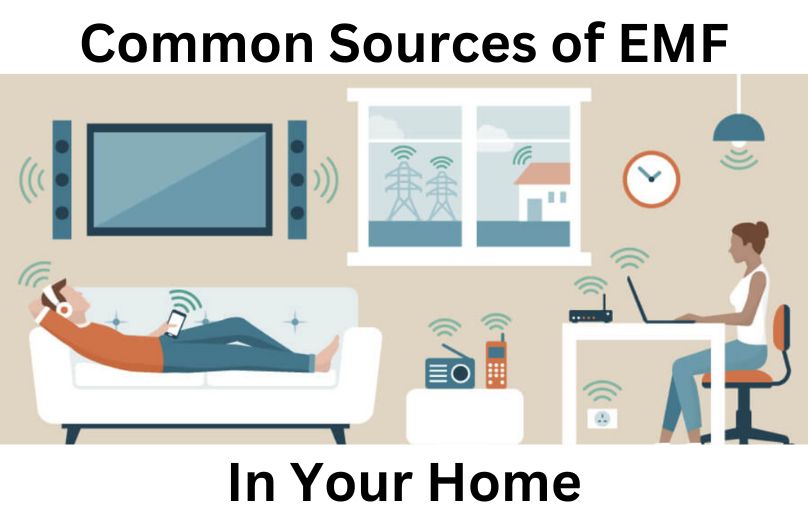
As someone who has tested EMF levels in hundreds of homes, I’ve noticed something important: most people only know about 3 EMF sources in their home, but my research shows the actual number is over 15. This gap in awareness means many families don’t realize how many devices around them create electromagnetic fields.
What My Research Shows
After testing homes across different neighborhoods, my findings are clear: the average home contains at least 15 active EMF sources, but when asked, most homeowners only name their cell phone, WiFi router, and microwave.
This blind spot isn’t surprising. EMFs are invisible, and many devices work quietly in the background. Most people haven’t learned about all the EMF sources around them.
What’s Really in Your Home?
Here’s what I typically find in homes:
Wireless Devices
- WiFi routers (often the strongest source)
- Cell phones
- Cordless phones
- Bluetooth speakers and headphones
- Smart home hubs
- Baby monitors
Kitchen Appliances
- Microwave ovens
- Refrigerators (especially newer smart models)
- Electric stoves
- Coffee makers
- Blenders
- Dishwashers
Home Electronics
- Smart TVs
- Computers and laptops
- Tablets
- Gaming systems
- Smart speakers
- Wireless printers
Electrical Systems
- Circuit breaker panels
- Household wiring
- Dimmer switches
- Smart meters
- Extension cords
- Charging stations
Bedroom Items
- Electric alarm clocks
- CPAP machines
- Electric blankets
- Wireless chargers
- Smart watches (while charging)
Dirty Electricity
Many people miss this hidden source of EMFs. Dirty electricity occurs when normal electrical current becomes disrupted or “dirty” with high-frequency spikes and surges. Common sources include:
- Dimmer switches
- Variable speed motors (in modern appliances)
- CFL and LED bulbs
- Solar panel inverters
- Smart appliances
- Laptop and phone chargers
These devices convert or interrupt standard 60 Hz AC power, creating electromagnetic noise that travels through your home’s wiring and radiates into living spaces.
Why This Matters
Most people spot their cell phone, WiFi router, and microwave as EMF sources. But they miss the other 12+ devices that also create fields in their home.
In my testing, I’ve seen that not all sources create equal EMF levels. Home offices have become EMF hotspots, with WiFi routers, computers, printers, and phones all packed into small spaces where people spend hours each day.
Kitchens contain many high-powered electrical appliances that can create strong magnetic fields when running.
Bedrooms need special care because we spend about one-third of our lives sleeping. Even low-level EMF exposure during sleep may affect sleep quality for some people.
The Power of Distance
My most important finding: EMF levels drop quickly with distance from the source. In my measurements, WiFi router radiation drops by over 90% at just 4 feet away, and reaches nearly zero at 11 feet.
This means simply moving devices can reduce your exposure without giving up your tech.
What You Can Do
If you’re concerned about EMF exposure, here are practical steps:
- Do a home EMF check: Consider using a basic EMF meter to find the strongest sources in your home. For accurate measurements of all three main EMF types (magnetic fields, electric fields, and RF radiation), check out my guide to the best EMF meters and detectors.
- Use distance: Place high-emission devices farther from areas where you spend lots of time.
- Focus on sleep spaces: Keep bedrooms as low-EMF zones by removing extra electronics. For maximum protection while sleeping, consider an EMF shielding bed canopy that blocks up to 99% of RF radiation. For a complete guide to creating a low-EMF sleep environment, visit my article on how to reduce EMF in the bedroom.
- Try wired options: When possible, use wired connections instead of wireless (Ethernet instead of WiFi, wired headphones instead of Bluetooth). For phone calls, air tube headsets offer a safer alternative by using hollow air tubes to conduct sound, keeping electronics farther from your head.
- Power down: Turn off devices when not using them, especially at night. Simply turning your WiFi router off at night can reduce your EMF exposure by 33% (8 hours out of 24).
- Consider protection options: For devices you use often, like cell phones, a quality EMF phone case can help reduce your direct exposure.
- Address dirty electricity: Test your home for dirty electricity using a specialized meter, then install dirty electricity filters on problematic circuits.
- Use a low-EMF router: Along with keeping distance from your router, consider upgrading to a low-EMF router designed to reduce radiation output while maintaining good connectivity. I particularly recommend the JRS Eco-WiFi Router which features a special “Full Eco” mode that automatically reduces radiation when devices aren’t actively using data.
- Consider protective clothing: For those who want additional protection, EMF-blocking clothing can shield parts of your body from radiation. I’ve personally tested many brands and found HÁVN’s clothing line to offer excellent protection with comfortable, stylish designs that integrate seamlessly into everyday wear.
Finding Balance
The goal isn’t to remove all EMF sources, which isn’t practical today. Instead, focus on being aware, using tech wisely, and taking simple steps to reduce exposure.
It’s about making smart choices about which sources matter most to you and finding a balance that works for your life and concerns.
What Science Says
Recent research provides a mixed picture of EMF health effects. On one side, a 2023 report from Sweden’s Scientific Council on Electromagnetic Fields concluded that “no new established causal relationships between EMF exposure and health risk have been identified.” Similarly, the National Institute of Environmental Health Sciences (NIEHS) states that most studies haven’t found strong links between EMFs and adult health issues.
However, growing scientific evidence suggests potential concerns. Multiple studies published in respected journals like the International Journal of Molecular Sciences have found that EMF exposure can increase oxidative stress in cells and tissues. This cellular stress response has been observed even at levels below current safety guidelines.
I believe we’re in a situation similar to where we once were with tobacco and asbestos – substances once thought safe that later proved harmful. While the science isn’t settled, I think it’s wise to take simple steps now to reduce exposure, rather than waiting decades for final proof of harm.
The fact that EMFs have been classified as “possibly carcinogenic to humans” by the International Agency for Research on Cancer adds weight to this cautious approach. I think of EMF protection like wearing a seatbelt – a reasonable precaution that may prevent serious harm.
Looking Forward
As our homes fill with more smart, connected devices, the number of EMF sources will likely increase. I suggest checking your home’s EMF landscape from time to time, especially when adding new tech.
By closing the gap between the actual number of EMF sources and your awareness of them, you can make better choices about how you use the technology that has become part of modern life.
Have you counted the EMF sources in your home? Were you surprised by how many you found? Share your experience in the comments below.