You’ve just bought an EMF meter and taken your first readings. The display shows numbers like “2.5 mG,” “45 V/m,” or “150 μW/m².” But what do these numbers actually mean? Are they safe? Should you be concerned?
Understanding how to interpret EMF meter readings is essential for making informed decisions about reducing your exposure. Without knowing what the numbers represent, your meter is just an expensive gadget collecting dust.
This guide will teach you how to read and understand your EMF meter measurements, what different units mean, and when readings indicate a problem. Once you know how to interpret your meter properly, you can find the best EMF detector for your needs and use it effectively.
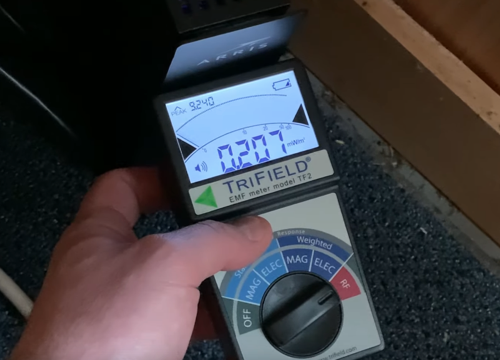
Understanding EMF Meter Units
The first step in interpreting your EMF readings is understanding the different units of measurement. EMF meters measure three main types of electromagnetic fields, each with its own unit.
Magnetic Field Units
Magnetic fields are measured in either milligauss (mG) or microtesla (μT), depending on where you are:
- In the United States: MilliGauss (mG) is the standard unit
- In most other countries: MicroTesla (μT) is more common
Conversion: 1 mG = 0.1 μT (or 10 mG = 1 μT)
For example, if your meter shows 5 mG, that’s the same as 0.5 μT. Both measure exactly the same thing—the magnetic field strength generated by current flow.
Most household readings will be in the range of 0.1 to 3 mG, though you may see higher spikes near certain appliances.
Electric Field Units
Electric fields are measured in volts per meter (V/m). This measures the electrical pressure or voltage difference between two points that are one meter apart.
For larger fields, you might see kilovolts per meter (kV/m), where 1 kV/m = 1,000 V/m.
Typical household electric field readings range from 1 to 50 V/m in most living spaces, though readings can spike to several hundred V/m very close to unshielded wiring or certain appliances.
Radio Frequency (RF) Units
RF radiation can be measured in several different units, which often causes confusion:
Most Common Units:
- Volts per meter (V/m) – Easiest to understand and use
- Microwatts per square meter (μW/m²) – Measures power density
- Milliwatts per square meter (mW/m²) – 1 mW/m² = 1,000 μW/m²
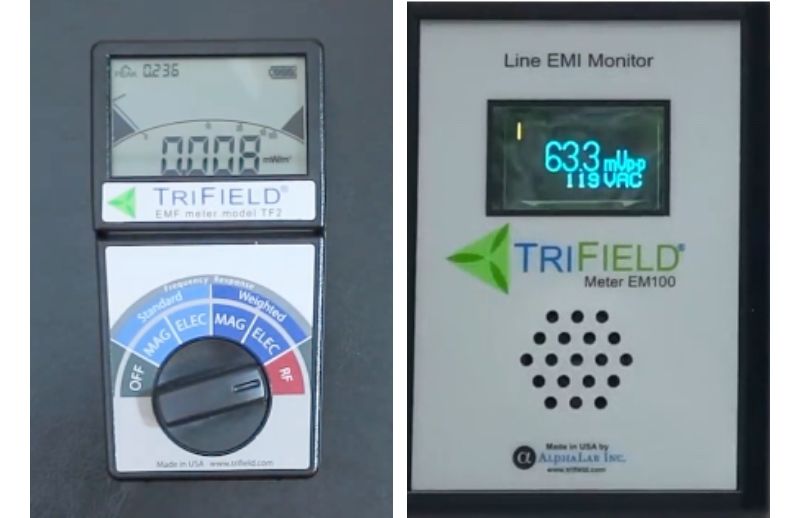
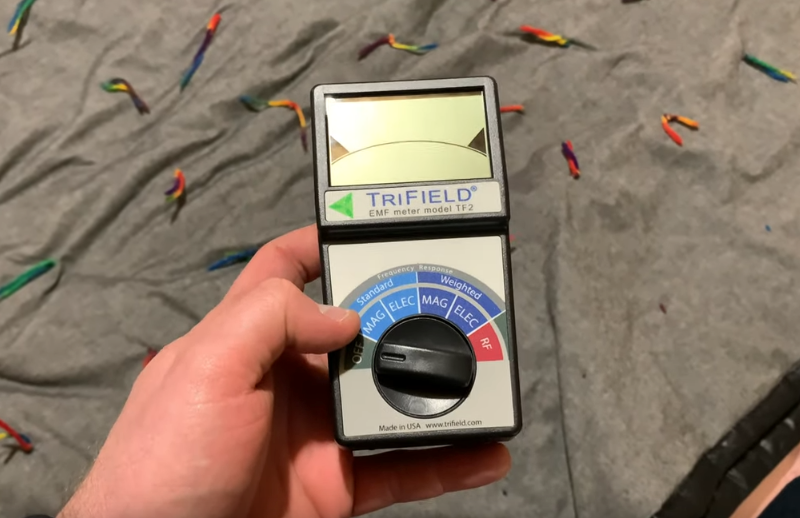
Why V/m is preferred: Most EMF meters (including the popular TriField TF2) display RF measurements in V/m because it’s simpler to understand and better captures the pulsing effects of wireless radiation, which many consider the most problematic aspect.
Typical household RF readings vary widely depending on your wireless devices, but readings below 0.1 V/m are considered low, while readings above 1 V/m indicate significant RF exposure.
What Are Safe EMF Levels?
This is where things get complicated. There is no universal agreement on what constitutes “safe” EMF levels, and different organizations provide vastly different recommendations.
The Regulatory Standards (Very High Limits)
Organizations like ICNIRP (International Commission on Non-Ionizing Radiation Protection) have set guidelines that many governments follow:
- Magnetic fields: Up to 2,000 mG for general public exposure
- Electric fields: 4,000-5,000 V/m
- RF radiation: Varies by frequency, but generally very high limits
These standards are designed to prevent acute thermal effects (heating of tissue) and immediate harm. However, many scientists and health advocates argue these limits don’t account for long-term biological effects from lower-level exposure.
The Building Biology Standards (Precautionary Approach)
Building Biology professionals, who specialize in creating healthy living environments, recommend much more conservative limits based on biological effects rather than just thermal effects.
For sleeping areas (where you spend 7-8 hours), Building Biology recommends:
Magnetic Fields:
- Below 0.2 mG – No concern
- 0.2-1.0 mG – Slight concern
- 1.0-5.0 mG – Severe concern
- Above 5.0 mG – Extreme concern
Electric Fields:
- Below 10 V/m – No concern
- 10-50 V/m – Slight concern
- 50-100 V/m – Severe concern
- Above 100 V/m – Extreme concern
RF Radiation:
- Below 0.1 μW/m² – No concern
- 0.1-10 μW/m² – Slight concern
- 10-1,000 μW/m² – Severe concern
- Above 1,000 μW/m² – Extreme concern
The BioInitiative Report Recommendations
The BioInitiative Report, compiled by 29 scientists who reviewed over 2,000 studies on EMF health effects, suggests even more protective limits:
- Magnetic fields: Below 1 mG for long-term exposure
- Electric fields: Below 10 V/m
- RF radiation: Below 0.3-0.6 V/m (or approximately 30-100 μW/m²)
While scientific debate continues about EMF health effects at typical household exposure levels, many people choose the precautionary approach and aim for the lower recommended levels, especially in bedrooms and areas where children spend time.
Interpreting Your Magnetic Field Readings
When you measure magnetic fields with your EMF meter, here’s how to make sense of the numbers:
Typical Household Readings
If you have a quality EMF meter, you’ll probably notice readings in your home somewhere between 0.1 mG and 1 mG in most areas, usually hovering around 0.4 or 0.5 mG. These are ambient levels typical in modern homes.
Apartments and condos typically show higher readings due to shared walls with neighboring units and their electrical systems.
What Causes Higher Readings?
Magnetic field readings above 1 mG in living spaces are considered elevated. Common causes include:
Close proximity to:
- Electrical panels and circuit breakers (often 10-50+ mG within 2 feet)
- Power transformers on utility poles
- Overhead or underground power lines
- Unshielded wiring in walls
Running appliances:
- Microwave ovens (up to 100+ mG when operating, within 1 foot)
- Hair dryers (up to 300 mG at the handle)
- Electric shavers (up to 100 mG)
- Refrigerators (2-10 mG at the front)
- Washing machines and dryers (5-30 mG when running)
Wiring errors:
- The most common reason some houses measure much higher AC fields is improper wiring and grounding connections within the house, which were not wired according to the National Electrical Code.
- These errors can create elevated fields throughout entire rooms or floors
Understanding Peak vs. Average Readings
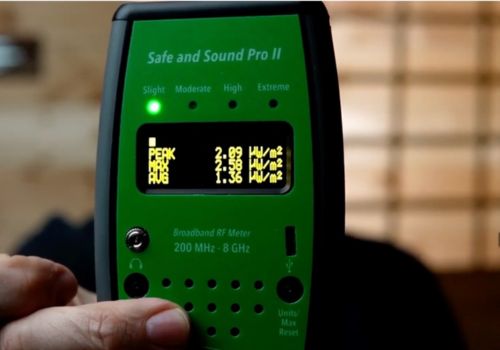
Many EMF meters display both average and peak readings:
- Average reading: The typical field strength over a short period
- Peak reading: The highest spike detected
When considering potential health risk, the highest peak readings indicate higher magnetic intensity, which is more problematic for long-term exposure. Both numbers matter, but sustained high averages are generally more concerning than occasional brief peaks.
Distance Is Your Friend
Magnetic field strength drops rapidly with distance from the source. For example:
- At the handle of a hair dryer: 300 mG
- 6 inches away: 50 mG
- 1 foot away: 10 mG
- 2 feet away: 1-2 mG
This inverse square relationship means doubling your distance from a source typically reduces exposure by about 75%.
Interpreting Your Electric Field Readings
Electric fields are often overlooked but can be significant, especially near unshielded wiring and electrical outlets.
Typical Household Readings
Background electric fields in homes are usually around 1-20 V/m in most areas. However, readings can vary significantly:
- Near walls with wiring: 10-120 V/m
- Next to electrical outlets: 20-100 V/m
- Under electric blankets: 100-200 V/m
- Near unshielded lamp cords: 30-150 V/m
Key Differences from Magnetic Fields
Electric fields have some important characteristics:
- They exist even when devices are off – As long as something is plugged in, voltage creates an electric field
- They’re easily shielded – Walls, trees, and most building materials block or reduce electric fields
- They drop off with distance – Similar to magnetic fields, intensity decreases as you move away
When to Be Concerned
According to Building Biology standards, electric field readings above 10 V/m in sleeping areas warrant attention. Readings above 50 V/m suggest a potential issue that should be investigated and reduced.
Common solutions include unplugging devices in bedrooms at night, using shielded power cords, or installing remote shut-off switches for bedroom circuits.
Interpreting Your RF Radiation Readings
RF (radio frequency) readings are often the most variable and can be the trickiest to interpret.
Understanding RF Behavior
Unlike magnetic and electric fields that come from wired electricity, RF radiation is wireless and travels through space. It also tends to pulse and spike rather than remain constant.
Your EMF meter may show:
- Sudden spikes when devices transmit data
- Fluctuating readings as you move around
- Varying levels throughout the day
This is normal behavior for RF radiation and why your meter needs to capture both average and peak values.
Typical RF Sources and Readings
Here are common RF readings you might encounter:
WiFi Routers:
- Within 1 foot: 200-2,000 μW/m² (or 0.3-1.0 V/m)
- 6 feet away: 50-400 μW/m²
- 15 feet away: 10-100 μW/m²
Cell Phones (actively transmitting):
- At the device: 10,000-100,000 μW/m² or higher
- 6 inches away: 1,000-10,000 μW/m²
- 3 feet away: 100-1,000 μW/m²
Smart Meters:
- At the meter: 5,000-50,000 μW/m² (during transmission bursts)
- 3 feet away: 1,000-5,000 μW/m²
- 10 feet away: 100-500 μW/m²
Cell Towers:
- Depends greatly on distance and direction
- Within 500 feet: Can be 1,000+ μW/m² with direct line of sight
- Beyond 1,000 feet: Typically 10-200 μW/m²
Safe RF Levels
Recommendations vary significantly:
- Building Biology (for sleeping areas): Below 0.1 μW/m²
- BioInitiative Report: Below 30-100 μW/m² for long-term exposure
- Precautionary approach: Below 1,000 μW/m² (or 0.6 V/m)
For context, if your EMF meter shows RF readings consistently above 100 μW/m² in areas where you spend significant time, many experts would recommend identifying and reducing the sources.
Common Interpretation Mistakes to Avoid
Mistake #1: Comparing Different Units
Make sure you’re comparing apples to apples. A reading of 2 mG is very different from 2 μT (which equals 20 mG). Always verify which units your meter is using.
Mistake #2: Not Accounting for Distance
Remember that EMF strength drops dramatically with distance. A reading of 50 mG right next to your microwave is very different from 50 mG in your bedroom where you sleep 8 hours per night.
Mistake #3: Only Taking Single Measurements
EMF levels can vary throughout the day, especially RF radiation. Take multiple readings at different times to get an accurate picture of your exposure.
Mistake #4: Ignoring Meter Calibration
If your meter shows unusually high or unstable readings, it may need calibration. Most quality EMF meters maintain calibration for years, but very cheap meters may give inconsistent results.
Mistake #5: Not Recording Measurements
Keep a notebook or digital log of your readings, including:
- Location
- Date and time
- Type of reading (magnetic, electric, or RF)
- Any nearby devices or sources
This record helps you identify patterns and track improvements after making changes.
What to Do with Your Readings
Once you’ve interpreted your EMF readings, you can take action:
If Readings Are Low (Below Concern Levels)
- Continue monitoring occasionally – Levels can change with new devices or neighbors
- Maintain good habits – Keep phones away from body, use wired connections when possible
- Test new devices – Before purchasing, measure similar items in stores when possible
If Readings Are Moderate (In the “Slight Concern” Range)
- Identify specific sources – Use your meter to pinpoint which devices create the highest readings
- Increase distance – Move beds, desks, and seating away from high-EMF areas
- Reduce usage time – Limit exposure to high-EMF devices
- Create low-EMF zones – Especially in bedrooms and children’s play areas
If Readings Are High (In the “Severe Concern” Range)
- Investigate wiring issues – High magnetic fields throughout a home often indicate wiring errors that an electrician can fix
- Consider shielding – RF shielding fabrics, paints, or window films can reduce wireless radiation
- Replace or relocate devices – Move WiFi routers away from living spaces, replace high-EMF appliances
- Consult a professional – For persistent high readings, consider hiring a certified EMF consultant
Room-by-Room Interpretation Guidelines
Different rooms have different acceptable levels based on how much time you spend there:
Bedrooms (Highest Priority)
Since you spend 7-8 hours sleeping here, aim for the lowest possible levels:
- Magnetic fields: Below 0.5 mG
- Electric fields: Below 10 V/m
- RF radiation: Below 10 μW/m²
Living Areas and Home Offices
Where you spend several hours daily:
- Magnetic fields: Below 1 mG
- Electric fields: Below 20 V/m
- RF radiation: Below 100 μW/m²
Kitchen and Utility Areas
Brief exposure is acceptable, but avoid lingering near operating appliances:
- Magnetic fields: Below 3 mG when not using appliances
- Electric fields: Below 50 V/m
- RF radiation: Below 200 μW/m²
Children’s Play Areas and Nurseries
Children may be more vulnerable, so use bedroom-level standards for spaces where they spend significant time.
Frequently Asked Questions
Here are answers to common questions about interpreting EMF meter readings.
What does mG mean on my EMF meter?
mG stands for milligauss, which is a unit for measuring magnetic field strength. It’s the standard unit used in North America. Readings below 1 mG are generally considered low in living spaces, while readings above 2-3 mG warrant investigation. For context, 1 mG equals 0.1 microTesla (μT), which is the unit used in most other countries.
How do I know if my EMF reading is dangerous?
There’s no universally agreed-upon “dangerous” level, but most Building Biology professionals consider readings above 1 mG for magnetic fields, 10 V/m for electric fields, and 100 μW/m² for RF radiation as worthy of concern in areas where you spend significant time. Compare your readings to the Building Biology standards listed earlier in this article for specific guidance.
Why do my EMF meter readings keep changing?
EMF readings naturally fluctuate because electromagnetic fields change based on what’s running, transmitting, or operating nearby. Magnetic fields change as appliances turn on and off. RF radiation spikes when wireless devices transmit data. This variation is normal. Take multiple readings over time to understand your typical exposure levels.
What’s the difference between peak and average readings?
Average readings show the typical field strength over a measurement period, while peak readings capture the highest spike detected. Both matter for health assessment. Sustained high averages indicate consistent exposure, while frequent high peaks (especially from RF sources) can be biologically significant even if averages are moderate.
Should I be more concerned about high readings close to devices or ambient levels throughout my home?
Both matter, but for different reasons. High readings close to devices (like hair dryers at 300 mG) are concerning if you use them regularly for extended periods. Ambient levels throughout your home matter more because you’re exposed continuously, especially in bedrooms. A consistent 3 mG in your bedroom where you sleep 8 hours is more problematic than brief exposure to 50 mG while using a microwave for 2 minutes.
How often should I measure EMF levels in my home?
Take baseline measurements when you first get your meter, then retest whenever you add new electronic devices, rearrange furniture, or make electrical modifications to your home. Quarterly or annual checks are beneficial since external sources (like neighbors’ WiFi or new cell towers) can change over time. Always retest after implementing any EMF reduction measures to verify they’re working.
Knowledge Enables Action
Understanding how to interpret EMF meter readings transforms your meter from a confusing gadget into a powerful tool for protecting your health. The numbers on your display now have meaning, and you can make informed decisions about which exposures to reduce.
Remember that interpreting EMF readings requires understanding both the numbers themselves and the context—distance from sources, duration of exposure, and which areas of your home matter most. While experts disagree on exactly what levels are “safe,” most agree that lower exposure is better, especially in sleeping areas and for children.
Start by measuring your home systematically, record your findings, and prioritize reducing the highest exposures in areas where you spend the most time. Even modest reductions in your daily EMF exposure can add up significantly over months and years.
The most important step is taking accurate measurements so you know what you’re actually dealing with. Armed with this knowledge, you can create a healthier electromagnetic environment for yourself and your family.