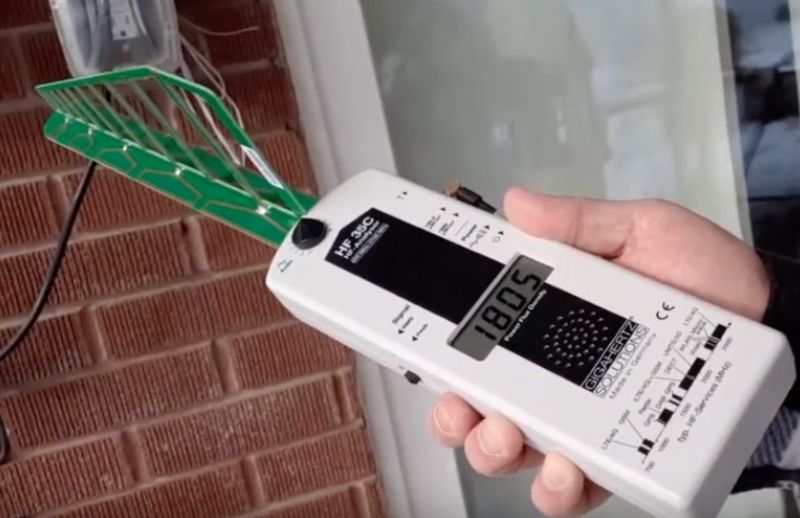
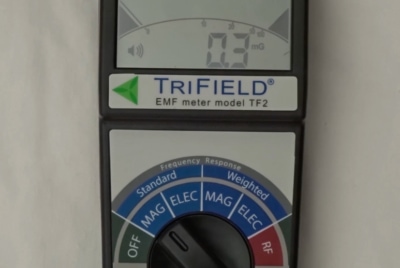
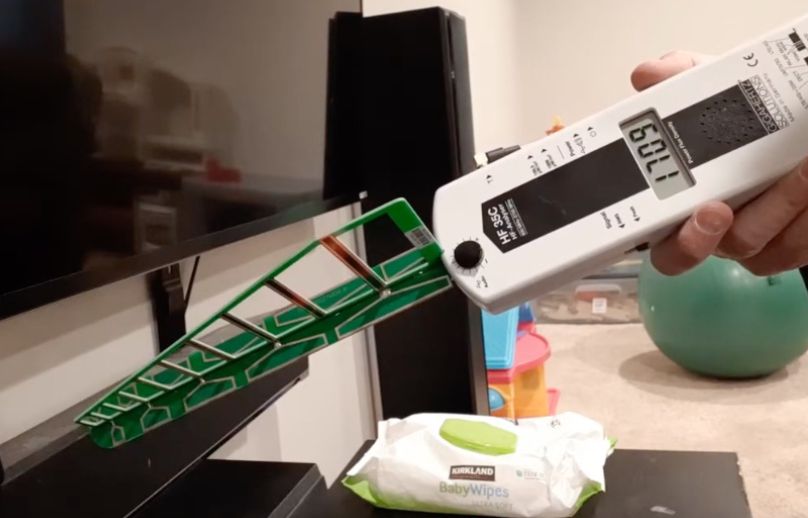
When measuring EMF in your home, you’ll quickly discover that some readings come from sources on the other side of walls. This raises an important question: is your meter actually detecting fields through the wall, or do you need to measure on both sides?
The answer depends on which type of EMF you’re measuring. Magnetic fields pass through walls easily, electric fields are mostly blocked, and RF radiation penetrates walls but at reduced strength. Understanding these differences helps you measure more accurately and identify hidden exposure sources.
For guidance on selecting a meter that can effectively detect all three field types, see our comparison of the best EMF meters and detectors.
How Different EMF Types Interact with Walls
Each type of electromagnetic field behaves differently when encountering building materials.
Magnetic Fields Pass Through Walls
Magnetic fields from electrical current flow through most building materials with minimal attenuation. This means your meter will detect magnetic fields from sources behind walls almost as strongly as if there were no wall present.
Common sources your meter detects through walls include:
Electrical wiring: Magnetic fields from wiring in walls, floors, and ceilings appear on your meter even when you’re measuring from the other side. This is why you often get readings near walls where no visible appliances exist.
Neighboring homes: In apartments and condos, your meter can detect magnetic fields from your neighbor’s electrical panel, major appliances, or wiring. A high reading near a shared wall might originate from the unit next door.
Exterior sources: The drop line bringing power from the street to your electrical meter creates strong magnetic fields that penetrate exterior walls. Your meter will show elevated readings several feet away from these cables, even inside your home.
Appliances in adjacent rooms: Refrigerators, washing machines, and other high-current appliances create magnetic fields that your meter detects through walls. You might measure 2-3 mG near a wall because a refrigerator is running on the other side.
The only materials that significantly block magnetic fields are specialized high-permeability metals like mu-metal. Standard building materials like wood, drywall, brick, and concrete provide virtually no shielding.
Electric Fields Are Blocked by Walls
Electric fields behave very differently from magnetic fields when encountering walls. Most building materials block approximately 90% of electric fields.
A typical house wall reduces electric field strength dramatically. If a source creates a 100 V/m electric field on one side of a wall, your meter might only detect 10 V/m on the other side.
Materials that block electric fields include:
Wood and drywall: Standard interior walls provide significant electric field shielding Brick and concrete: Exterior walls block most electric fields from outside sources Metal: Any metal in walls (studs, conduit, foil-backed insulation) blocks electric fields very effectively
However, electric fields can still travel through openings. Windows, doors, and gaps in walls allow electric fields to pass through. This is why you might detect electric fields from outdoor power lines when standing near a window but not near a solid wall.
Since walls block most electric fields, your meter primarily detects electric field sources in the same room where you’re measuring. Elevated readings typically come from nearby outlets, lamps, or appliances in the immediate area rather than sources behind walls.
RF Radiation Penetrates Walls at Reduced Strength
Radio frequency radiation from wireless devices passes through walls but loses strength in the process. How much the signal weakens depends on the wall material and thickness.
According to FCC RF exposure guidelines, standard interior walls (wood frame with drywall) reduce RF radiation by approximately 3-6 dB, which translates to roughly 50-75% signal loss. Your meter will still detect RF from sources behind walls, but the readings will be lower than if you measured on the source side of the wall.
Different materials affect RF penetration differently:
Wood and drywall: Minimal RF blocking, signals pass through relatively easily Brick: Moderate RF reduction, roughly 60-80% signal loss Concrete: Significant RF blocking, especially thick concrete walls Metal: Excellent RF shielding when properly installed
Windows affect RF measurements considerably. Measuring RF near a window often shows much higher readings than measuring near a solid wall when the source is outside. If you’re trying to determine how much RF enters from your neighbor’s WiFi or a nearby cell tower, measure near windows for a more accurate assessment.
Practical Implications for Home Measurements
Understanding how walls affect different field types changes your measurement strategy.
Identifying Magnetic Field Sources
Since magnetic fields penetrate walls easily, high readings near walls or in corners often indicate wiring or sources behind the wall or in adjacent spaces.
When you measure elevated magnetic fields without an obvious source in the room, scan along walls systematically. Note where readings increase. Common hidden sources include:
Electrical panels: If your bedroom shares a wall with the garage where the electrical panel is located, you might measure 5-10 mG or higher near that wall.
Service entrance cables: The thick cables bringing power into your home create strong magnetic fields that extend several feet through walls. Beds positioned near these cables can have elevated exposure even though the cables are outside or in another room.
Appliance locations: A reading of 3-4 mG near a wall might come from a refrigerator, furnace, or water heater on the other side. Use your meter on both sides of the wall to confirm the source location.
Measuring Electric Fields Accurately
For electric field measurements, focus on sources in the same room. Walls block most electric fields from adjacent spaces, so what your meter detects primarily comes from nearby outlets, cords, and devices.
The exception is when you’re measuring near doors or windows. These openings allow electric fields from other rooms or outside sources to enter. If you measure high electric fields near a doorway, the source might be in the adjacent room.
Assessing RF Penetration from External Sources
To understand how much RF radiation enters your home from external sources like cell towers or neighbor’s WiFi, you need to measure both inside and outside.
Take readings at several locations:
Outside near the suspected source: Measure on the exterior wall closest to the cell tower or neighbor’s WiFi router.
Inside against the same wall: Measure at the corresponding interior location.
Inside near windows: Check how much RF enters through windows on the same side.
Comparing these readings shows you how much your walls reduce the RF signal. If you measure 1000 μW/m² outside but only 200 μW/m² inside, your walls provide about 80% reduction.
This information helps you decide if additional shielding is worthwhile. If walls already block most of the signal, shielding might not provide much additional benefit. If substantial RF still penetrates, targeted shielding could significantly reduce exposure.
When Walls Create Measurement Challenges
Walls can sometimes make it difficult to identify exact source locations.
Multiple Floors and Ceilings
Magnetic fields from wiring or appliances on different floors pass through ceilings and floors just as easily as they pass through walls. A high reading in your bedroom might originate from the electrical panel directly below in the basement, or from appliances in the room above.
To identify sources between floors, measure at the same location on both floors. If readings are highest on the ceiling of the lower floor and the floor of the upper room, the source is likely between the two levels (wiring in the floor/ceiling assembly).
Shared Walls in Multi-Unit Buildings
In apartments and condominiums, magnetic field sources in neighboring units affect your readings. You might measure elevated fields near shared walls from your neighbor’s appliances, electrical panel, or even their main service entrance.
This presents a challenge because you cannot control or relocate sources that aren’t in your space. Your options become:
Rearrange furniture: Move beds and seating away from shared walls with high readings.
Measure at different times: Magnetic fields from appliances fluctuate as neighbors use different devices throughout the day.
Document patterns: Note when readings are highest to understand usage patterns in adjacent units.
Identifying Wiring in Walls
When your meter shows elevated magnetic fields near a wall without obvious appliances nearby, the source is likely wiring within the wall itself. This can be particularly problematic if wiring carries high current or has incorrect configurations.
Net current wiring: Properly wired circuits have hot and neutral wires running together, which keeps magnetic fields very low. When wiring is configured incorrectly with hot and neutral separated, magnetic fields increase dramatically.
High-current circuits: Wiring for electric heating, major appliances, or subpanels carries more current and creates stronger magnetic fields, even when properly configured.
If you identify problematic wiring in walls, an electrician can often reconfigure the circuits to reduce magnetic field exposure.
Using Your Meter Effectively Around Walls
These techniques help you get accurate readings when walls are involved.
Systematic Wall Scanning
Hold your meter at a consistent height (typically waist level or bed height) and move it slowly along walls. Note where readings increase. When you find a hotspot, measure on both sides of the wall if possible to determine which side the source is on.
For magnetic fields, the readings will be similar on both sides. For electric fields and RF, readings will be higher on the source side.
Testing Windows vs. Solid Walls
When assessing external RF sources, measure at both windows and solid walls on the same side of your home. The difference shows you how much the wall material reduces the signal versus openings.
If window readings are 5-10 times higher than wall readings, most RF enters through windows. If readings are similar, the wall material doesn’t provide much shielding and RF penetrates throughout.
Accounting for Distance
Remember that all electromagnetic fields decrease with distance from the source. When you measure through a wall, the wall thickness adds distance between the meter and the source.
A source creating 10 mG at 1 foot might only create 2.5 mG at 2 feet. If the wall is 6-8 inches thick, this additional distance slightly reduces your reading compared to measuring on the source side, even for magnetic fields that penetrate the wall easily.
This effect is minimal for magnetic fields but can be significant for RF measurements where walls both absorb signal and add distance.
Common Misconceptions About Walls and EMF
Several common misunderstandings lead to measurement errors.
“Walls Block All Radiation”
Many people assume walls protect them from EMF, but this is only partially true. Walls significantly reduce electric fields and somewhat reduce RF, but provide essentially no protection from magnetic fields.
This misconception leads people to place beds against walls thinking the wall shields them from sources on the other side, when in fact magnetic fields from wiring or appliances penetrate the wall with minimal reduction.
“If I Can’t See the Source, My Meter Won’t Detect It”
Your meter detects magnetic fields from hidden wiring in walls, floors, and ceilings. It also detects fields from sources in adjacent rooms, floors above and below, and even neighboring units in multi-family buildings.
High readings don’t always have an obvious source in the immediate area. Systematic measurement around walls, floors, and ceilings helps identify hidden sources.
“Metal Walls Block All EMF”
While metal does shield electromagnetic fields, it must be properly installed to be effective. A metal roof or siding doesn’t automatically block all EMF because openings for doors, windows, vents, and wiring penetrations allow fields to enter.
For metal to effectively shield, it needs to form a continuous barrier with minimal gaps and proper grounding in many cases.
“Thicker Walls Always Block More EMF”
Wall thickness has minimal effect on magnetic field penetration. A 12-inch concrete wall blocks magnetic fields no better than a 4-inch wood-frame wall.
For electric fields and RF, thicker walls do provide more shielding, but the material matters more than thickness. A thin layer of metal provides better RF shielding than a thick concrete wall.
Frequently Asked Questions
Here are answers to common questions about measuring EMF through walls.
Can my EMF meter detect my neighbor’s WiFi through walls?
Yes. RF radiation from WiFi routers passes through most interior and exterior walls, though the signal strength reduces significantly. Standard wood-frame walls might reduce the signal by 50-75%, while concrete or brick provides more shielding. Your meter will detect neighbor’s WiFi, but the readings will be lower than if you measured in their home.
Why do I get high magnetic field readings near walls with no appliances?
High magnetic field readings near walls typically come from electrical wiring inside the wall, wiring in adjacent rooms, or sources in neighboring units (in multi-family buildings). Magnetic fields pass through building materials easily, so your meter detects fields from hidden sources behind walls.
Do I need to measure on both sides of a wall?
For magnetic fields, measuring both sides helps identify which side the source is on, though readings will be similar on both sides. For electric fields and RF, measuring both sides shows how much the wall blocks the field. The source side always shows higher readings for these field types.
Can EMF meters detect power lines through exterior walls?
Yes. Magnetic fields from overhead or underground power lines penetrate exterior walls easily. If you live near transmission lines, your meter will detect elevated magnetic fields inside your home, especially in rooms on the side closest to the lines. Electric fields from power lines are mostly blocked by exterior walls.
Will metal studs in walls block EMF?
Metal studs provide some shielding for electric fields and RF radiation but do not significantly block magnetic fields. The metal must form a continuous grounded barrier to effectively shield, which is difficult with standard stud construction that has gaps between studs and openings for electrical boxes and plumbing.
How do I know if high readings come from my home or a neighbor’s?
Measure at different times of day and note patterns. If readings increase when you turn on appliances in your home, the source is yours. If readings change at times that don’t correlate with your usage patterns, the source may be in a neighboring unit. Also measure on both sides of shared walls to identify which side shows higher readings.
Making Informed Decisions About Wall Penetration
Understanding how different electromagnetic fields interact with walls helps you measure more accurately and identify exposure sources you might otherwise miss.
Magnetic fields pass through walls with minimal attenuation, electric fields are mostly blocked, and RF penetrates at reduced strength depending on wall materials. Your meter detects all three types through walls, but the reading accuracy and source identification difficulty varies by field type.
When measuring your home, scan along walls systematically and consider sources that might be hidden behind walls, in adjacent rooms, or in neighboring units. Compare readings near windows versus solid walls to understand how much building materials reduce RF from external sources.